Multi-Agent Systems Explained
Basics · 6 min
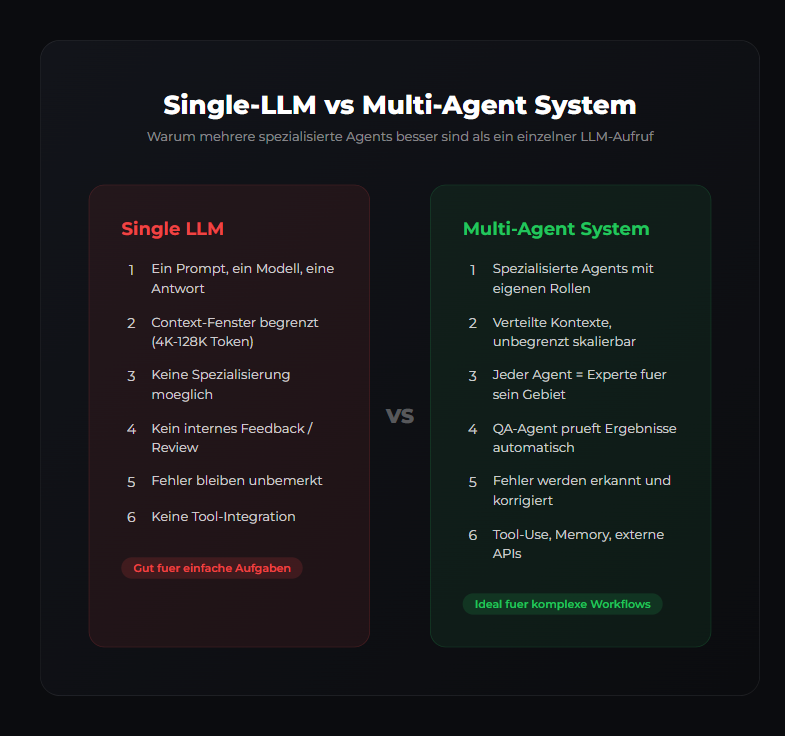
Multi-Agent Systems (MAS) are systems where multiple AI agents work together to solve complex problems. Instead of one all-powerful AI, you have specialized agents that communicate and collaborate.
Why Multiple Agents?
- Specialization: Each agent can be optimized for a specific task
- Scalability: Add more agents as needed
- Robustness: System continues even if one agent fails
- Cost efficiency: Use simple agents for simple tasks
Agent Types
1. Research Agent
Searches the web, reads documents, gathers information.
2. Coder Agent
Writes code, fixes bugs, implements features.
3. Review Agent
Reviews code, checks tests, ensures quality.
4. Deploy Agent
Deploys to production, manages infrastructure.
5. QA Agent
Runs tests, reports bugs, validates outputs.
Communication Patterns
| Pattern | Use Case |
|---|---|
| Message Passing | Direct communication between agents |
| Blackboard | Shared memory all agents access |
| Publish/Subscribe | Agents subscribe to topics |
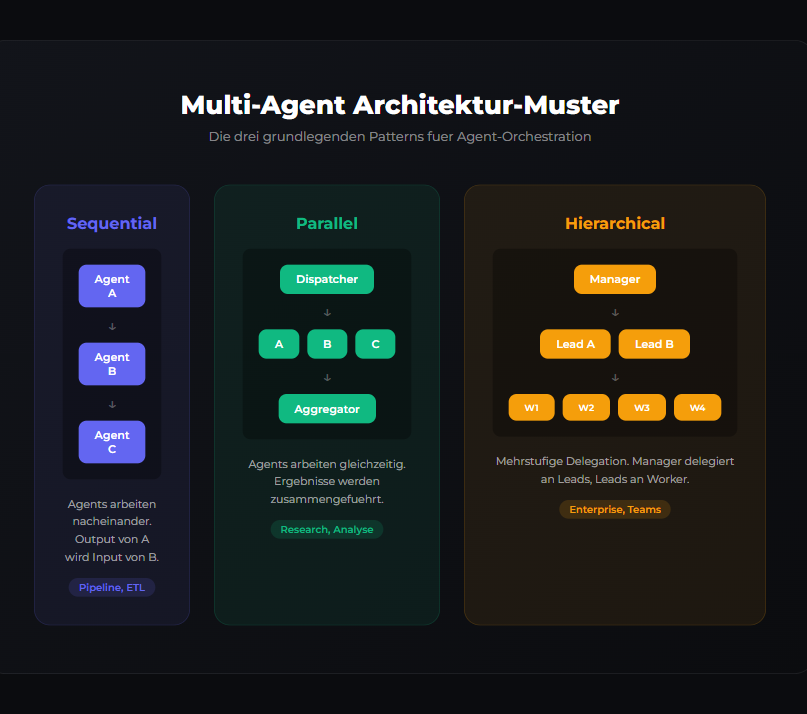
| Orchestrator | Central agent coordinates all |
Real-World Example
User: "Write a web app"
  |
  v
[Orchestrator]
  |
  +--> [Research Agent] --> "Best frameworks for web apps"
  |
  +--> [Coder Agent] --> "Writes the code"
  |
  +--> [Review Agent] --> "Reviews the code"
  |
  v
Final Web AppRelated articles
What is Agent Orchestration?
Agent Orchestration coordinates multiple specialized AI agents. Roles, communication flow, and why it beats a single LLM.
Agent Roles & Responsibilities
Role model for Multi-Agent Systems: orchestrator, workers, QA/review and infra. Clear ownership, boundaries and escalation paths in practice.
Task Delegation Pattern
Orchestrator assigns tasks to specialized agents. Routing, priorities, deadlines.
Was this article helpful?
Continue the learning path
The learning path puts these articles in order, and the Hub carries the building blocks we have checked in our own operations.
- Local and self-hosted
- Documented and verifiable
- From our own operations
- Made in Austria